

Guide · Malay Food 101
How a Malay meal is built — and how to order your way to a great one.
If you've never sat down to a proper Malay meal, the menu can look like a happy puzzle — dozens of dishes, no obvious "main," and names you may not recognise. The good news: Malay food is built to be shared, and once you understand how a table comes together, ordering is easy (and hard to get wrong). Here's how a first-timer can order like a regular.
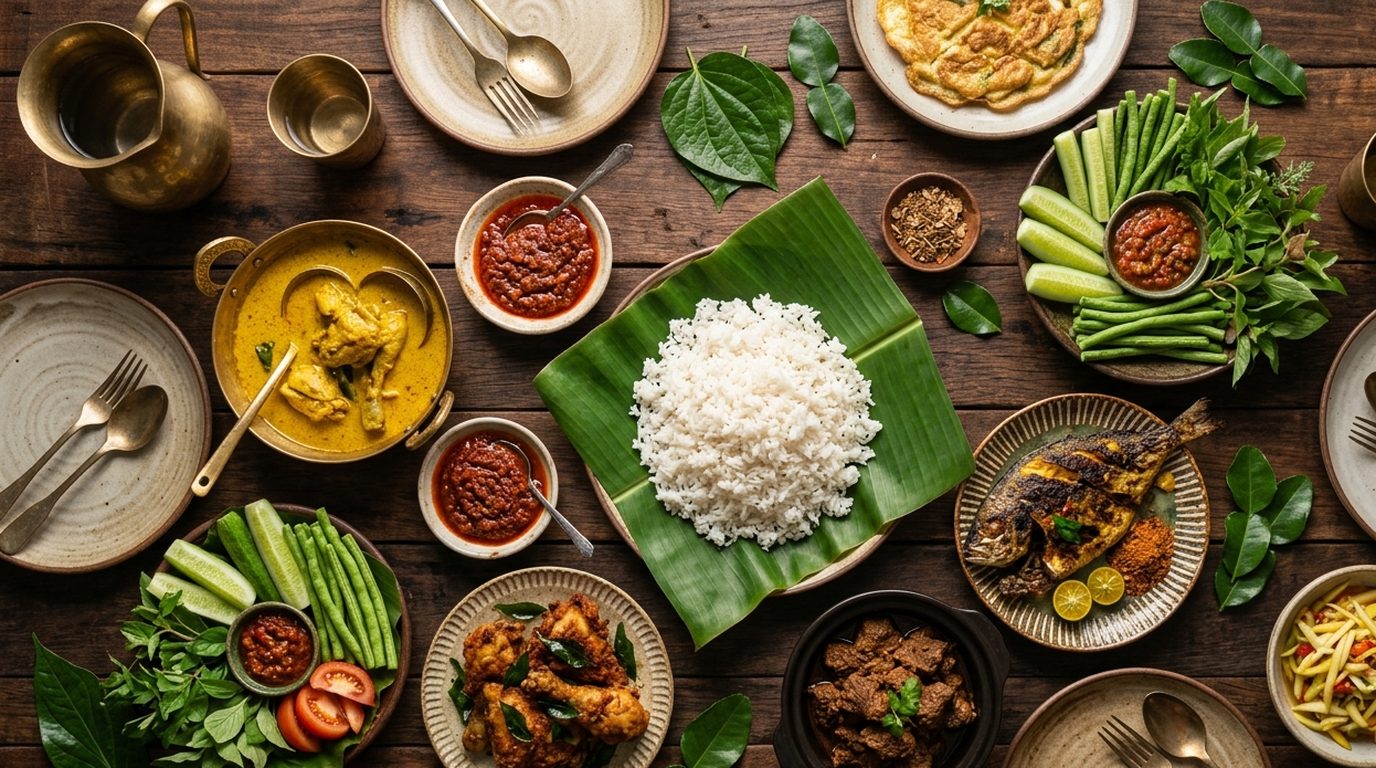
Forget one-plate-per-person. A Malay meal is a spread: a big bowl of rice in the middle, and a handful of dishes that everyone reaches for together. Think of it as building a balanced table rather than choosing a single entrée. The rice is the constant; the dishes are how you paint it. The Malay phrase is hidang untuk dikongsi — served to be shared.
A reliable first table for two to four people looks like this:
1. A sambal or a starter — sambal belacan (hand-pounded chilli and toasted shrimp paste) is the backbone of the whole meal; a fresh ulam platter of raw herbs is the classic companion. 2. One rich, saucy dish — a gulai or masak lemak cili api (turmeric-and-coconut curry). 3. One "dry" or grilled protein — ayam goreng berempah (spiced fried chicken) or smoked daging salai for contrast. 4. A vegetable — stir-fried kangkung or kacang to lighten the table. 5. Rice for everyone. You can see all of these on our menu.
The secret to a great Malay table isn't ordering the spiciest thing — it's contrast. Pair something rich (a coconut gulai) with something fresh (ulam, cucumber), something fiery (sambal) with something cooling (rice, salted egg), and something sour (an asam pedas or a tangy kerabu salad) to cut through it all. A table that hits all four notes feels complete — and keeps everyone reaching for more.
A simple rule: one rice each, plus roughly one shared dish per person, plus a sambal and a vegetable. So four people might order four mains across different styles, a vegetable, a sambal, and rice — and share the lot. Tell your server if you're unsure; a good Malay kitchen will happily steer you to a balanced spread, and flag the spice levels.
Spoon and fork is perfectly normal (spoon in the right hand, fork in the left to push). Eating with your hand is traditional and very welcome too. Serve yourself small amounts of several dishes over your rice rather than loading one big portion — that way every mouthful is a little different. And there's no rushing: dishes arrive together and stay on the table, to be grazed and returned to.
End on gula Melaka — palm sugar, the caramel soul of the Malay dessert table. Warm cekodok pisang (banana fritters), sago gula Melaka, or appam gula hangus are the perfect, gentle full stop after a savoury, spice-warmed meal.
That's really the whole secret: order across the table, balance the flavours, and bring an appetite. If you'd like a hand, our team will gladly build a spread for your group. Browse the menu, read our guide to eating in Cyberjaya, or book a table and let the dishes arrive together.